For four years I said I couldn't afford them. I'd had the money since 2019.
A retired medical office manager from Toledo spent thirty-one years explaining benefits to other people. It took her four years to find the one that applied to her.

Photo supplied by the author.
I want to tell you about the most expensive thing I never bought.
My name is Diane. I’m 68. I managed the front office of an internal medicine practice in Toledo, Ohio for thirty-one years. Insurance verification, claims, prior authorizations, the whole miserable business.
If you’ve ever stood at a medical counter while somebody typed and frowned and said “let me check that for you” — that was my job.
So I know benefits. I knew Medicare Part B like I know my own kitchen.
Which is why what happened to me is either funny or humiliating, and I’ve decided to go with funny.
The sentence I said a thousand times
There’s a sentence I must have said a thousand times across those thirty-one years.
A patient would come out of the exam room with a slip in their hand. Referral to audiology. And somewhere in the next five minutes, usually with their reading glasses pushed up on their forehead, they’d ask me the question.
“Does Medicare cover this?”
And I’d say: “The test, sometimes. The hearing aids, no. I’m sorry.”
Medicare does not cover hearing aids. It never has.
I watched what that sentence did to people. Some got angry. Most just went quiet and folded the slip and put it in a pocket, and I knew — I genuinely knew, standing right there — that a lot of those slips were never going to come back out of that pocket.
I felt bad about it for thirty-one years.
Then it was my turn.
How I found out it was my turn
It wasn’t a doctor who told me. It was my sister.
Carol calls on Sunday afternoons. Has done since our mother died in 2011. Same time, right after her church lets out.
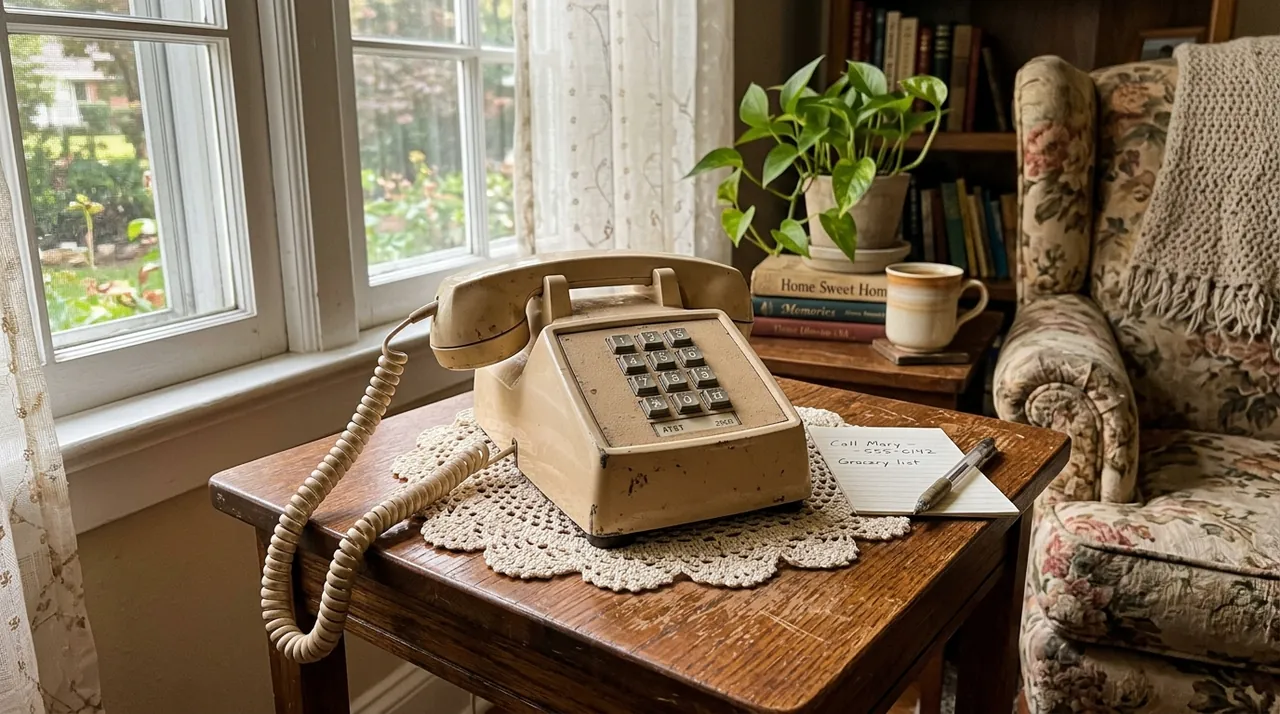
The phone was the first thing to go. Nobody warns you about that. In person you can watch a face and fill in the gaps. On the phone there’s nothing to work with — just a voice coming through a small speaker, and half the consonants missing.
So I started letting Carol go to voicemail. Not always. Just when I was tired, or when I’d had a long week, or when I didn’t have it in me to say “what?” four times to my own sister.
I’d call her back later. Sometimes.
She never said a word about it. She just started calling less. Sunday became every other Sunday. Every other Sunday became when-something-happened.
I did that. She didn’t do that. I did.
The paper on my kitchen table
I got tested in 2021. Mild to moderate in both ears, worse in the range where women’s voices sit — which explained Carol, and explained my granddaughters, and explained about four years of nodding at things.
Why this happens
You are not hearing less. You are hearing half of every word.
Age-related hearing loss almost never takes sound away evenly. It takes the high notes first, and leaves the low ones alone.
That one fact explains almost everything that is happening to you.
Vowels are low, long and loud. They survive. So a voice still reaches you and still sounds like a voice.
Consonants are the opposite — high, short and quiet. The s, the f, the th, the k. Those are the first to go.
And consonants are where the meaning lives.
What is actually said
Did you feed the cat this morning?
What arrives without the high notes
_i_ ooo _ee_ _e _a_ _i_ _or_i__?
You still heard something. You heard the rhythm, the tone, the fact that it was a question. You just did not get the words.
Three things follow from that, and every one of them will sound familiar.
- Everyone seems to mumble. They are not. You are receiving the part of speech that has no edges.
- The television is a fight, but music is fine. Music is mostly vowels and instruments. Dialogue is mostly consonants.
- Restaurants are the worst place on earth. Background noise is low-pitched, so it covers what is left of the voice.
This is also why the guessing starts. If you miss the opening consonants of a sentence, you lose the subject — and you spend the rest of it trying to work out what the sentence was about.
And from the outside, that does not look like a hearing problem. It looks like something else entirely.
The quote was $4,800.
And here is where thirty-one years of doing insurance did me exactly no good at all.
I sat at my kitchen table with that paper and I did what everybody does. I thought: that’s the furnace fund. I thought: that’s two years of property tax. I thought: I’m on a fixed income and this is a want, not a need.
Then I put the paper in the drawer in the kitchen where things go to die.
And for four years, whenever it came up, I said the same thing:
“I can’t afford them.”
What I finally sat down and worked out
What broke it was, of all things, a receipt.
I was cleaning out that drawer in 2025 — the quote was still in there, at the bottom, gone soft at the folds — and underneath it was a statement from my HSA.
I’d opened that account in 2019, my last working year. Put money in it every pay period the way you do, because everybody tells you to and it comes out before tax so you barely feel it.
$2,400 sitting in it. Four years. Untouched.
I want you to understand that I am the person who explains these accounts to other people. That was my literal job.
And I had never once connected the account to the quote.
So I went and read the rules, properly, the way I’d have read them for a patient.
Hearing aids are generally a qualified medical expense for HSA and FSA funds. It’s not a loophole and it isn’t clever. It sits in a document that nobody reads. Plans do vary, so check with your own administrator — mine confirmed it in one phone call.
Medicare pays nothing. And the whole time, there was an account with my name on it that would.
I told other people no for thirty-one years. Then I told myself no for four.
The other half of the arithmetic
While I was in there, I got stubborn about the $4,800 too. Thirty-one years of claims will do that to you — you develop a nose for a number that doesn’t smell right.
Here’s what’s inside a hearing aid: a microphone, a small processor, a speaker, a battery, and a shell. Published industry estimates put parts and assembly in the low hundreds of dollars.
A couple hundred in. Forty-eight hundred out.
I’ll be fair, because I was on the other side of that counter for three decades. Some of that gap is real. Somebody tested me. Somebody would have programmed the device and seen me for follow-ups. That’s work and it has value.
But it is not four thousand five hundred dollars of value. I have read enough billing to know the difference between a service and a markup.
There’s a name for that gap once you can see it:
The Clinic Tax
The suite in the medical plaza. The lease. The front desk — which, again, was me, for thirty-one years, so I know exactly what that costs and it isn’t this. And the commission for whoever slides the quote across the desk, because in most of those places he’s paid on what he sells you.
And then I found the part that actually explains the whole thing.
Until 2022, there was no way to buy a hearing aid directly.
By regulation, hearing aids had to be dispensed through a licensed professional. The device came bundled with the office, no matter what. There was no version where you bought the hardware alone — no matter how straightforward your hearing loss was.
In October 2022, the FDA changed that. Over-the-counter hearing aids became available for adults with perceived mild to moderate loss. No prescription. No exam required. Nobody in the middle.
The device didn’t get cheaper.
It just became possible to buy it on its own.
I’d had the quote in my drawer since 2021. The rule changed in 2022. Nobody sent me anything. I found out in 2025, cleaning a drawer.
| National clinic chain, quoted price | $4,000 – $5,000 |
|---|---|
| Warehouse club hearing centre | around $1,500 |
| Drugstore over-the-counter pair | $199 – $999 |
| Parts and assembly, industry estimates | low hundreds |
Figures are the ranges commonly published for each channel, not quotes for any specific product. Your own quote will differ.
If you want to compare the current prices against whatever you were quoted, they are listed here.
See what it costs without the roomGoes to the seller's website. We are paid a commission if you buy.
What I did with it
I ordered a pair direct. Paid with the HSA. The whole thing took about four minutes.
I’ll be honest about the first few days, because the reviews that skip that part are worthless to you.
Days one through three were unpleasant. Everything was loud and near. My own footsteps. The refrigerator, which apparently has been running this entire time. Paper is outrageously loud and nobody tells you.
It settled by the end of the week. That’s apparently how it works — your brain has been ignoring those sounds for years and has to sort out what’s worth keeping.
They’re also small. Smaller than I expected. My granddaughter, who is fifteen and notices everything, has not mentioned them.
And on the second Sunday after they arrived, at about ten past one, the phone rang.
I answered it on the second ring.
Carol talked for forty minutes about a neighbor’s fence dispute that I did not care about even slightly, and I heard every word of it, and when we hung up I sat there in the kitchen for a while.
She’s back to every Sunday now.
She never once mentioned that she’d stopped.
What buyers wrote
These are verified customer reviews published by Nebroo, reproduced with the reviewer's name and city as published. Nebroo states these are real customer reviews received by email and social media. We did not write them. See them at the source.
- Robert Ruggles Gering, US
★★★★★
I bought HearWell by Nebroo after my expensive hearing aids had finally wore out. I had tried several bargain aids that didn’t work well. The Nebroo brand proved to be very comfortable and works well. These are worth the low price.
- Craig McCue Melbourne, US
★★★★★
I like mine a lot. The customer service people are outstanding. I had no idea how much I was missing.
- D'Anna Fortunato Phoenix, US
★★★★★
They fit my ears perfectly and I do have some small ear canals as well. A blessing to have found them!
- Diana Ayers Kerrville, US
★★★★★
Their hearing aids are the best and super easy to use. To top it off the customer service is also great. This is my 3rd pair but only because I accidentally broke the first and lost the second. Also reasonably priced.
- Laura Barns Gering, US
★★★★★
Have had mine awhile now and I so love them. So great to hear again.
Individual results vary. These accounts describe those buyers' experiences and are not a promise of what any other person will experience.
What I’d tell you
I’m not going to tell you a device fixed my life. I’m 68 and my knees still tell me when it’s going to rain.
But I spent thirty-one years watching people fold a piece of paper and put it in a pocket, and I’ve now been the person folding the paper, so I’d say three things.
One. If Medicare told you no, that was true and it was also incomplete. Check whether you have an HSA or an FSA before you decide you can’t afford anything. It’s your own money and it’s already been taxed the good way.
Two. The number you were quoted is not the price of hearing. It’s the price of the room. Since 2022 the room is optional, and almost nobody was told.
Three. The cost of waiting isn’t money. I want to be careful here, because it sounds like a line and it isn’t. The cost is that people quietly stop calling. They don’t announce it. They just call less, and then they call when something’s happened, and you don’t notice until you’re sitting in a kitchen doing arithmetic about a drawer.
Four years. Two thousand four hundred dollars, sitting there the whole time.
Don’t be me about it.
Where these facts come from
- U.S. Food and Drug Administration — OTC Hearing Aids: What You Should Know The rule allowing hearing aids to be sold without a prescription, effective October 2022.
- Medicare.gov — Hearing aids coverage Confirms Original Medicare does not cover hearing aids or exams for fitting them.
- IRS Publication 502 — Medical and Dental Expenses Lists hearing aids as a qualified medical expense. Plan rules vary; confirm with your administrator.