They thought I was losing my memory. I was losing the first three words of every sentence.
A retired shop teacher from Erie spent two years being talked about instead of talked to. What he found had nothing to do with his memory — and everything to do with a $4,995 number he never questioned.

Photo supplied by the author.
You don’t notice it starting.
What you notice is that people have begun repeating themselves. And then, later, that they’ve stopped.
My name is Walter. I’m 72. I taught high school woodshop in Erie, Pennsylvania for thirty-eight years. Four hundred kids a year, band saws running, sanders going, some boy hollering across the room that he’d cut a board wrong again.
I could hear a chisel land badly from twenty feet.
So I’ll be honest with you: it never once occurred to me that the problem was my ears.
What it looked like from the inside
My grandson Danny is eleven. He used to come in off the bus and unload his whole day on me. Who said what. Who got in trouble. What the science teacher did with the dry ice. I’d be sitting at the kitchen table and he’d talk at me for fifteen minutes straight without coming up for air.
Somewhere in the last two years, that stopped.
Not all at once. He’d say something. I’d say “what?” He’d say it again. I’d catch the back half and answer the wrong question.
He’d look at me for a second.
Then he’d say, “never mind, Pap.”
Never mind, Pap.
I heard that one just fine.

The part I’m not proud of
I got good at faking it.
That’s the piece nobody warns you about. You don’t ask people to repeat themselves five times — it’s exhausting for everybody and you can watch it wearing on them. So you learn to read the room instead.
You laugh when the table laughs. You nod at the rhythm of a sentence instead of the words in it. You answer the question you think was asked and hope you got close.
You get away with it. Mostly.
Until you don’t.
My daughter called in March to tell me her father-in-law had passed. I said, “well, that’s good to hear.”
I’d caught maybe four words and filled in the rest wrong.
She didn’t correct me. That’s the part that stayed with me. She just went quiet and changed the subject. I didn’t find out what I’d actually said until my wife Ellen told me three days later.
Ellen had been covering for me long before that. Repeating the waitress. Repeating the pharmacist. Answering for me at the counter.
I thought she was being helpful.
She’d become my translator, and I had never once asked her whether she wanted the job.
What everybody had started to assume
Here’s the part that’s harder to write.
Somewhere in that second year, the family started talking to me differently. Slower. Louder. Carefully.
Ellen told me later that Danny had asked her, straight out, whether Pap was “starting to lose it.”
Eleven years old. Watching his grandfather answer the wrong question at dinner for the third time in one night, and drawing the only conclusion an eleven-year-old could draw.
It wasn’t my memory. My memory is fine. I can still tell you the grain direction on a board I planed in 1994.
I was losing the first three words of every sentence.
That’s all it was. But if you lose the first three words, you lose the subject. And if you lose the subject, you spend the rest of the sentence guessing.
From the outside, guessing looks exactly like forgetting.
Why this happens
You are not hearing less. You are hearing half of every word.
Age-related hearing loss almost never takes sound away evenly. It takes the high notes first, and leaves the low ones alone.
That one fact explains almost everything that is happening to you.
Vowels are low, long and loud. They survive. So a voice still reaches you and still sounds like a voice.
Consonants are the opposite — high, short and quiet. The s, the f, the th, the k. Those are the first to go.
And consonants are where the meaning lives.
What is actually said
Did you feed the cat this morning?
What arrives without the high notes
_i_ ooo _ee_ _e _a_ _i_ _or_i__?
You still heard something. You heard the rhythm, the tone, the fact that it was a question. You just did not get the words.
Three things follow from that, and every one of them will sound familiar.
- Everyone seems to mumble. They are not. You are receiving the part of speech that has no edges.
- The television is a fight, but music is fine. Music is mostly vowels and instruments. Dialogue is mostly consonants.
- Restaurants are the worst place on earth. Background noise is low-pitched, so it covers what is left of the voice.
This is also why the guessing starts. If you miss the opening consonants of a sentence, you lose the subject — and you spend the rest of it trying to work out what the sentence was about.
And from the outside, that does not look like a hearing problem. It looks like something else entirely.
That’s the thing I’d want somebody to hear before they waste the two years I wasted. It isn’t your hearing that people judge. It’s what your hearing makes you look like.
Why I waited two years anyway
I’ll give you the real reason, not the polite one.
I went to a hearing place in 2023. Sat in the booth, did the beeps, the whole business. Mild to moderate loss in both ears, the man said. Mostly in the range where consonants live — which is exactly why voices sounded like mumbling but the television sounded fine.
Then he slid the paper across the desk.
$4,995.
I taught shop. I’ve been on a fixed income since 2018. I sat there and did the arithmetic everybody does in that chair. That’s most of a used truck. That’s the roof we’ve been putting off. That’s four months of everything.
And underneath the arithmetic there was a second thought I didn’t say out loud:
Five thousand dollars to admit I’m old.
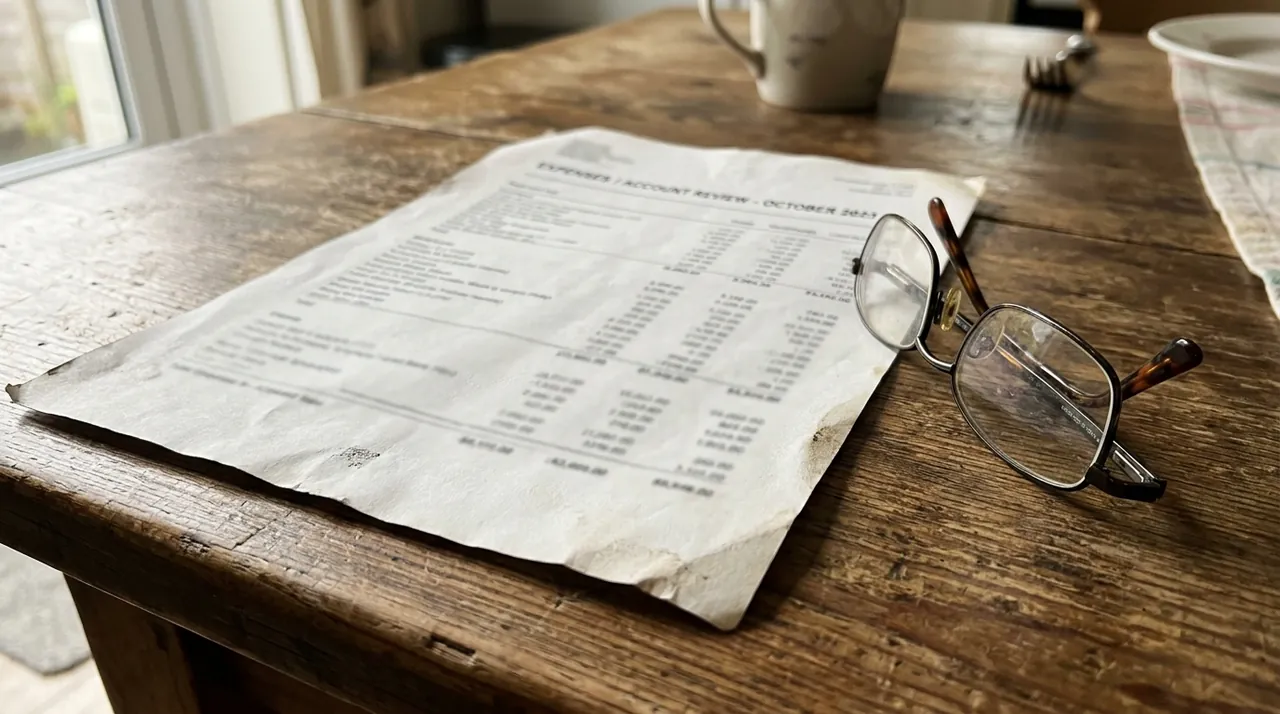
So I told him I’d think about it.
And I thought about it for two years.
What finally broke it
It wasn’t Danny, honestly. It was stubbornness.
I’ve built furniture my whole life. I know what materials cost. And I could not make five thousand dollars fit inside an object that weighs less than a wedding ring.
So I did what I’d do with any bid that smelled wrong. I took it apart.
A hearing aid is a microphone, a small processor, a speaker, a battery, and a shell. That’s the whole list. Published industry estimates put parts and assembly somewhere in the low hundreds of dollars.
A couple hundred dollars in. Five thousand dollars out.
I want to be fair, because I chewed on this a long time. Some of that gap is real work. Somebody tested my hearing. Somebody would have programmed the device and had me back in for follow-ups. That has value, and I’m not going to pretend it doesn’t.
But it is not four thousand seven hundred dollars of value.
Here’s what that gap actually is. It has a name once you can see it.
The Clinic Tax
The storefront. The lease on the suite in the medical plaza. The receptionist. The commission for the fellow who slid the paper across the desk — because in most of those places, he’s paid on what he sells you, and there is always a better model one page down.
And then I found the part that made me sit back in the chair.
Until 2022, there was no way to buy the device by itself.
In this country, hearing aids were regulated so they had to be dispensed through a licensed professional. The device came bundled with the office, no matter what. There was no version of it where you bought the hardware alone — no matter how simple your hearing loss was, no matter how much you wanted to.
In October 2022, the FDA changed that rule. Hearing aids for adults with perceived mild to moderate loss became available over the counter. No prescription. No exam required. Nobody in the middle.
The device didn’t get cheaper.
It just became possible to buy it on its own.
Nobody sent me a letter about it. I found out three years late, sitting at my own kitchen table with a legal pad and a cup of coffee going cold.
I had spent two years believing I couldn’t afford to hear.
What I actually couldn’t afford was the room.
| National clinic chain, quoted price | $4,000 – $5,000 |
|---|---|
| Warehouse club hearing centre | around $1,500 |
| Drugstore over-the-counter pair | $199 – $999 |
| Parts and assembly, industry estimates | low hundreds |
Figures are the ranges commonly published for each channel, not quotes for any specific product. Your own quote will differ.
If you want to check the current prices yourself, they are listed here. It takes about a minute.
See what it costs without the roomGoes to the seller's website. We are paid a commission if you buy.
The second thing nobody told me
While I was down that hole, I found something else, and this one genuinely irritated me.
Medicare does not cover hearing aids. It covers a hearing exam in some cases. It does not cover the device. It never has.
But here’s the part I didn’t know, and I’ve since found out most people my age don’t know either:
If you have an HSA or an FSA, hearing aids are an eligible expense.
That’s your own money. Money you already set aside, before tax. It sits there and most people spend it on eyeglasses in December because they forgot they had it.
So Medicare pays nothing — and meanwhile there may be an account with your name on it that will. Check with your plan administrator; the rules vary by plan.
I used mine. It took about four minutes.
What actually changed at my kitchen table
I bought a pair without the room attached. Ordered direct, shipped to the house, for a fraction of what was on that paper.
I’m going to be straight about the first three days, because anybody who skips this part is selling you something.
The first three days were strange. Everything was too loud and too present. My own boots on the kitchen floor. Ellen’s spoon against a coffee cup. Paper. I genuinely wondered whether I’d thrown away my money.
Then it settled. Apparently that’s normal — your brain’s been ignoring those sounds for years and it needs a minute to work out what matters again.
I’ll say this too: they’re small. Smaller than I expected. Ellen had to look twice to find them, and she was looking on purpose. That mattered to me more than I’d have admitted beforehand.
By the end of that first week I was at the table when Danny came in off the bus.
He started talking. Something about a boy named Marcus and a science fair project that had gone badly wrong.
And I answered the actual question. First time.
He didn’t say anything about it. Eleven-year-olds don’t. He just kept going.
He’s been keeping going ever since.
Ellen noticed before I did, same as always. About two weeks in she said, “you know you’ve stopped watching my mouth when I talk.”
I hadn’t known I was doing it.
What buyers wrote
These are verified customer reviews published by Nebroo, reproduced with the reviewer's name and city as published. Nebroo states these are real customer reviews received by email and social media. We did not write them. See them at the source.
- Robert Ruggles Gering, US
★★★★★
I bought HearWell by Nebroo after my expensive hearing aids had finally wore out. I had tried several bargain aids that didn’t work well. The Nebroo brand proved to be very comfortable and works well. These are worth the low price.
- Craig McCue Melbourne, US
★★★★★
I like mine a lot. The customer service people are outstanding. I had no idea how much I was missing.
- D'Anna Fortunato Phoenix, US
★★★★★
They fit my ears perfectly and I do have some small ear canals as well. A blessing to have found them!
- Diana Ayers Kerrville, US
★★★★★
Their hearing aids are the best and super easy to use. To top it off the customer service is also great. This is my 3rd pair but only because I accidentally broke the first and lost the second. Also reasonably priced.
- Laura Barns Gering, US
★★★★★
Have had mine awhile now and I so love them. So great to hear again.
Individual results vary. These accounts describe those buyers' experiences and are not a promise of what any other person will experience.
Three things I’d tell you if you were across the table
I’m not going to tell you a device fixed my life. I’m 72. My knees are still bad and I still can’t find my glasses.
But I’d tell you three things.
One. If people have started repeating themselves around you, they’re already accommodating you. They just haven’t told you. And the stage after repeating isn’t repeating louder. It’s not bothering.
Two. Whatever you think you’re hiding, you’re not hiding it. What people see isn’t a man with good hearing. It’s a man who answers the wrong question and laughs a beat after everyone else. My grandson had a word for that, and the word wasn’t “deaf.”
Three. The number you were quoted is not the price of hearing. It’s the price of the room. And since 2022, the room is optional.
I lost two years to that number.
I’d like somebody else to lose less.
Where these facts come from
- U.S. Food and Drug Administration — OTC Hearing Aids: What You Should Know The rule allowing hearing aids to be sold without a prescription, effective October 2022.
- Medicare.gov — Hearing aids coverage Confirms Original Medicare does not cover hearing aids or exams for fitting them.
- IRS Publication 502 — Medical and Dental Expenses Lists hearing aids as a qualified medical expense. Plan rules vary; confirm with your administrator.